

Overview
About Sherry
"3-Minute Thesis"
Congratulations, Sherry!
Overview
This Month, We’re Celebrating the Future of PPGL Research
The Pheo Para Alliance is committed to advancing support, awareness, and progress for individuals and families affected by pheochromocytoma and paraganglioma (PPGL).
This month, we are proud to spotlight something especially meaningful: A milestone moment in the next generation of physician-scientists working to change the future of this disease.
As Sherry Zhou, an MD–PhD candidate at Mayo Clinic, prepares to publicly defend her dissertation focused on the molecular drivers of SDH-related PPGL, she has chosen to use this moment not just as a personal achievement but as an opportunity to give back. Sherry is dedicating this fundraiser in honor of and in gratitude of the mentorship that she has received from her PI, Dr. Jim Maher, who himself is a paraganglioma patient and survivor.
Through this campaign, we are celebrating:
- The power of scientific discovery
- The importance of patient-centered research
- The individuals dedicating their careers to improving outcomes in rare diseases
At PPA, we believe that progress happens when science, patients, and community come together.
By supporting this campaign, you are not only honoring Sherry’s work—you are investing in the future of PPGL research, advocacy, and patient care.
About Sherry
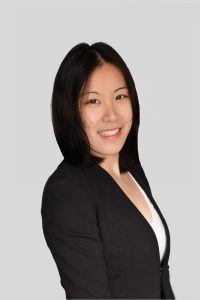
Sherry Zhou is an MD–PhD candidate at Mayo Clinic whose work focuses on the molecular drivers of SDH-related pheochromocytoma and paraganglioma.
As both a physician-in-training and researcher, she is committed to advancing understanding of these tumors while improving outcomes for patients and families navigating these conditions.
Her work is also shaped by the experiences of individuals directly impacted by PPGL—reinforcing the importance of connecting scientific discovery with real-world impact.
Sherry is committed to sharing her work with the broader public in an accessible manner since her goal is to do research that is from the patients, for the patients, and by the patients.
"3-Minute Thesis"
Sherry has provided the following paragraph as a “3-minute thesis” talk to explain her research:
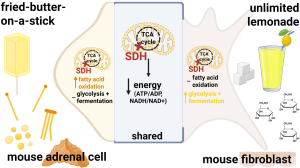
“Imagine that you are at a state fair: do you line first up for the unlimited refill lemonade stand or do you rush to get your favorite fried-butter-on-a-stick? Or do you follow your nose to the fresh apple cider donuts and funnel cakes? These are the same choices a cell has to make about what main energy source it wants to rely on depending on its environment and what is available. Our cells have preferences too, whether genetic, epigenetic, or environmental, that predispose them to favor or disfavor certain types of energy sources. But what happens when we have a malfunctioning gallbladder, or when a key component of the energy-conversion machinery in the cell is broken? We can adapt, of course, and usually manage to make do with an adjusted diet. But what if we have Celiac disease and lactose intolerance, and we were relying on that now dysfunctional organ or pathway out of necessity? My research focuses on a very special cell, the neuroendocrine chromaffin cell of the adrenal medulla and nerve ganglia. We are interested in understanding what happens when we lose the citric acid cycle enzyme succinate dehydrogenase or SDH, which also serves as Complex II in the electron transport chain. Instead of these cells dying, these SDH-loss cells can instead form rare tumors called pheochromocytoma and paraganglioma. These tumors are difficult to detect and can only be cured by surgery. However, they also tend to metastasize early, particularly these ones that result from loss of SDH. These chromaffin cells, unlike the skin cells I also work with, are barely surviving and dividing when they lose SDH, despite being fed lots of glucose and pyruvate, suggesting that they do not normally rely heavily on glycolysis or lactic acid fermentation to grow. However, I found that these SDH-loss chromaffin cells are addicted to fatty acids compared to normal chromaffin cells, while the fibroblasts, whether SDH-loss or not, do not have much of a preference. Saturated fatty acids like palmitate and other goodies we can find in fried butter are used by mitochondria in fatty acid oxidation to generate energy. In fact, when I block the key step in fatty acid import into the mitochondria with a drug, only SDH-loss chromaffin cells are unable to grow and survive. So, while SDH-loss skin cells, whose electron transport chains are broken by loss of SDH, rely on glycolysis and fermentation to generate ATP to survive, SDH-loss chromaffin cells rely on mitochondrial fatty acid oxidation to survive, managing to produce some ATP through a significantly impaired yet semi-functional electron transport chain. So in our bodies, this means that the SDH-loss chromaffin cells, which are often located in our lipid-rich adrenal glands, and are addicted to fried butter-on-a-stick, may be able to survive just enough to develop further genetic mutations that transform them into such aggressive tumors, while the SDH-loss skin cells that are addicted to lemonade die, unable to sustain themselves on the lower sugar levels present in our blood and tissues. Perhaps these unique differences in cellular metabolism could be a vulnerability for these unusual fatty acid-addicted tumors for the development of targeted therapeutics against these SDH-loss chromaffin cells.”

Congratulations, Sherry!
Congratulations, Sherry!
Click here to see a brief recap of Sherry’s amazing fundraising efforts and to make any final contributions!
Thank you all for your support!